Event Recap

Inside the Financial Markets Quality Conference 2026: Insights from Regulators, Lawmakers, and Wall Street

September 28, 2026 Version: 4 https://finpolicy.georgetown.edu/wp-content/uploads/2026/09/20260923-MSB_0061.jpg

The financial markets are changing rapidly, posing new opportunities and challenges to Wall Street, regulators and investors everyday. The surging interest in prediction markets have upended the economics of information. Digital assets are moving more into the mainstream. Tokenization promises a future where round-the-clock trading is the norm and transaction costs are lower. Private markets — once reserved for institutional and wealthy investors — are now increasingly available to retail investors. At the same time, the underlying infrastructures that power global financial markets are in flux.

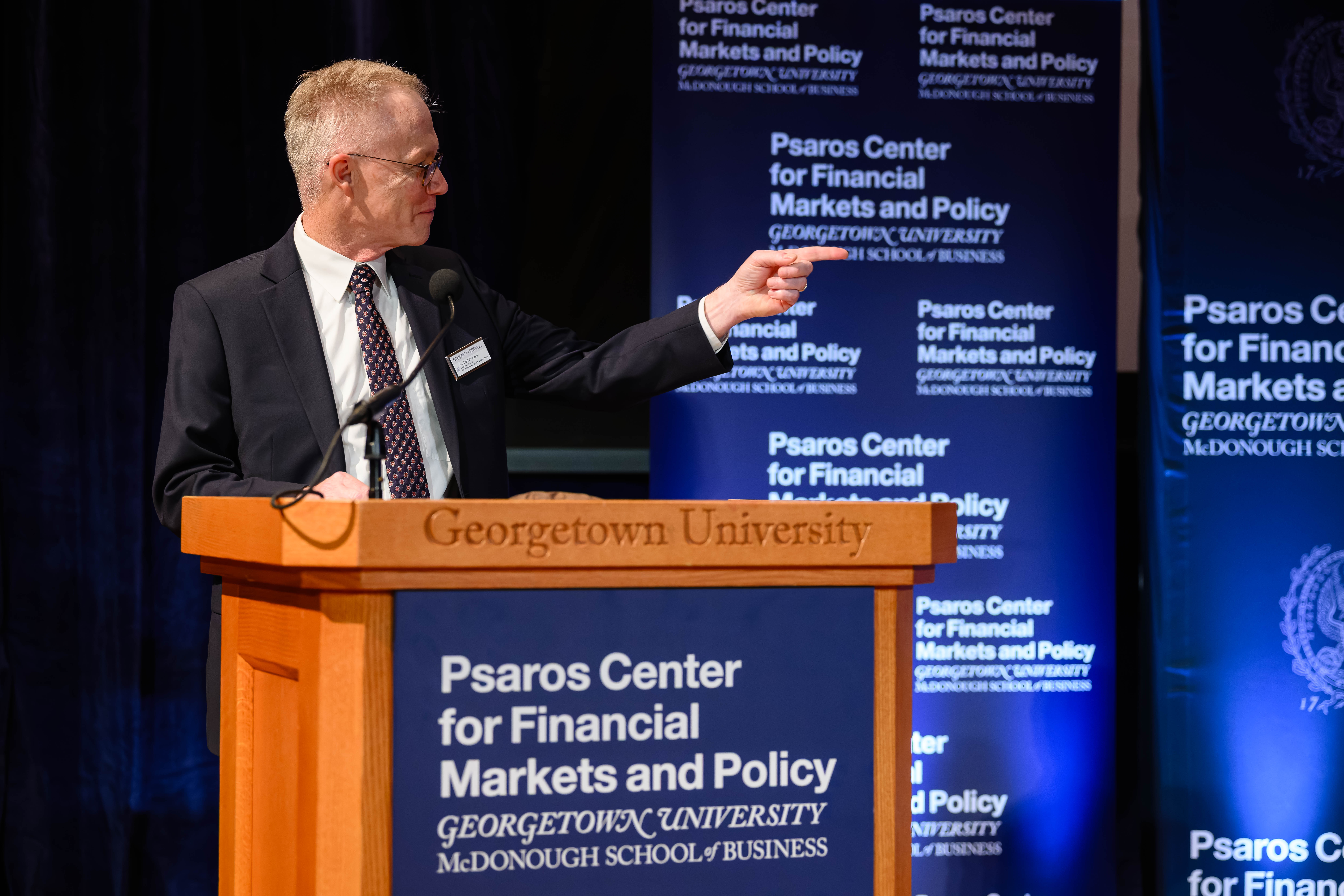
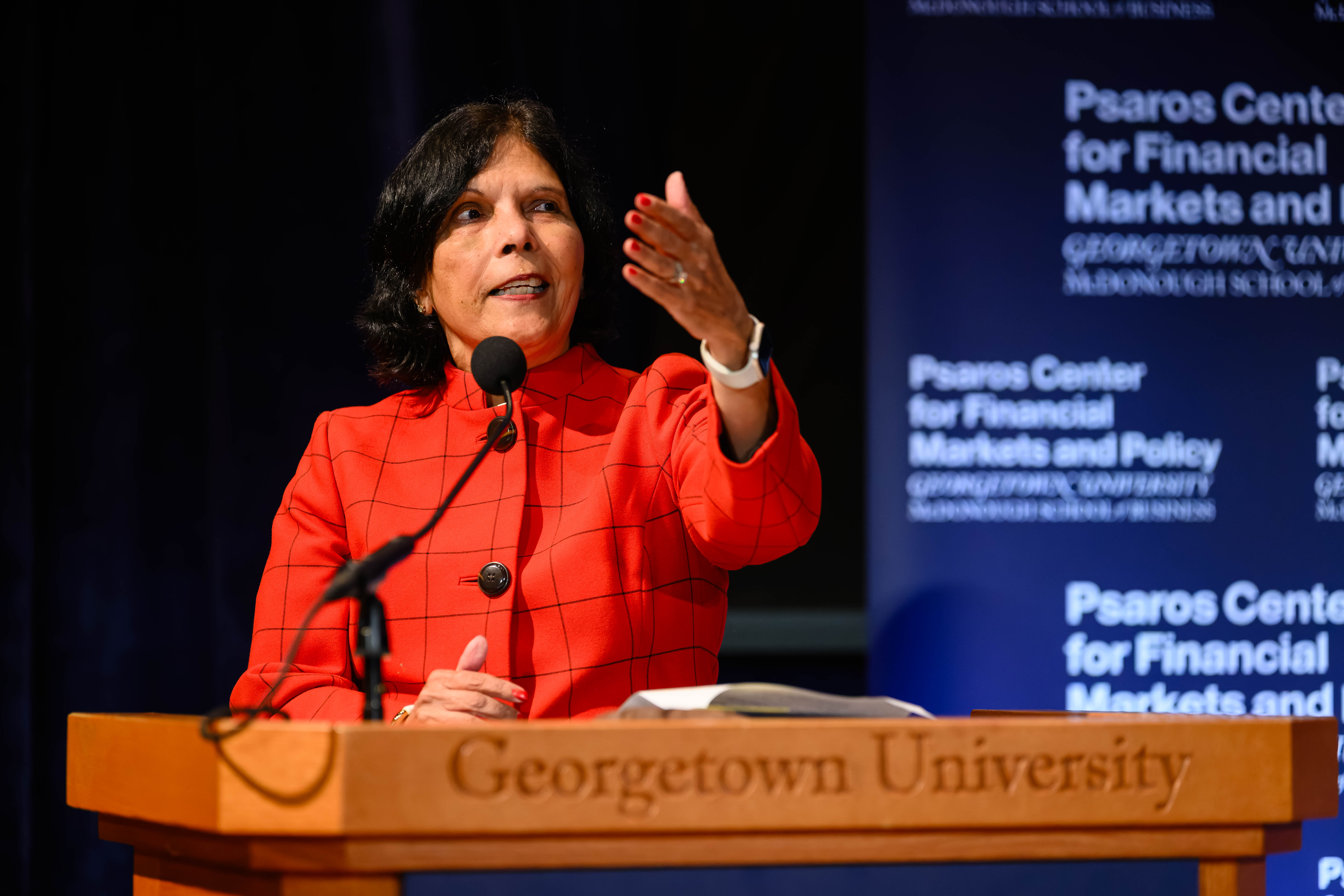
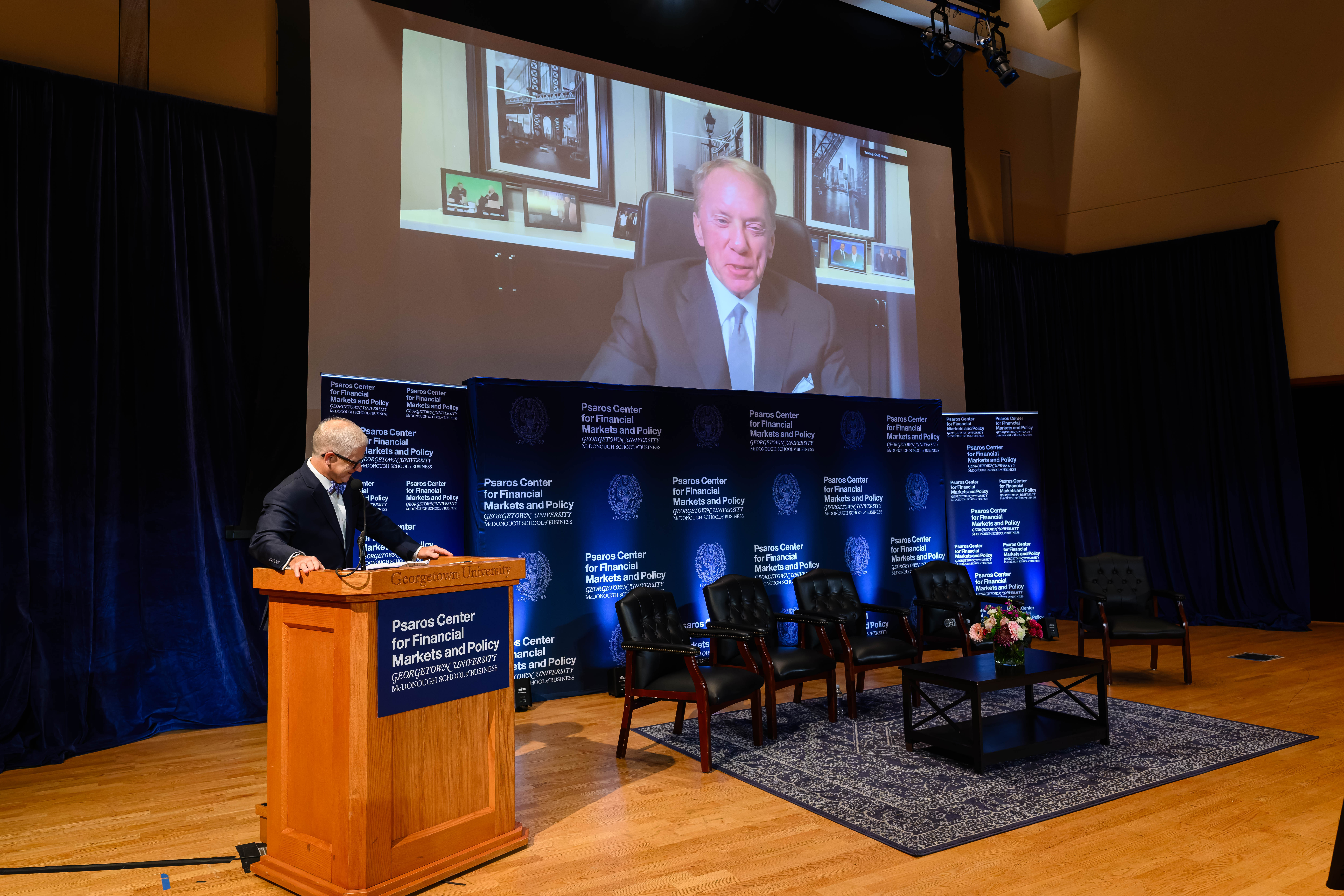
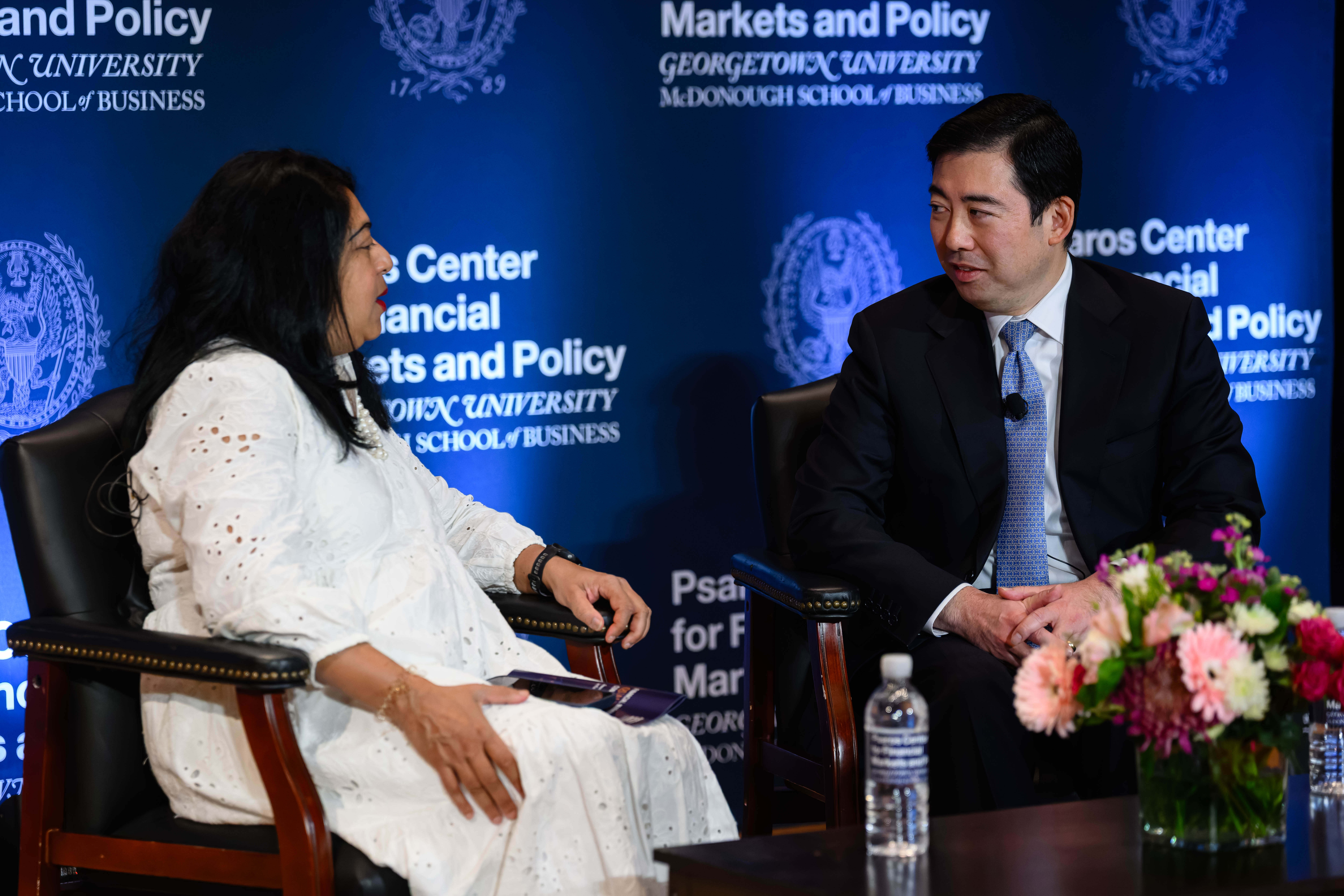
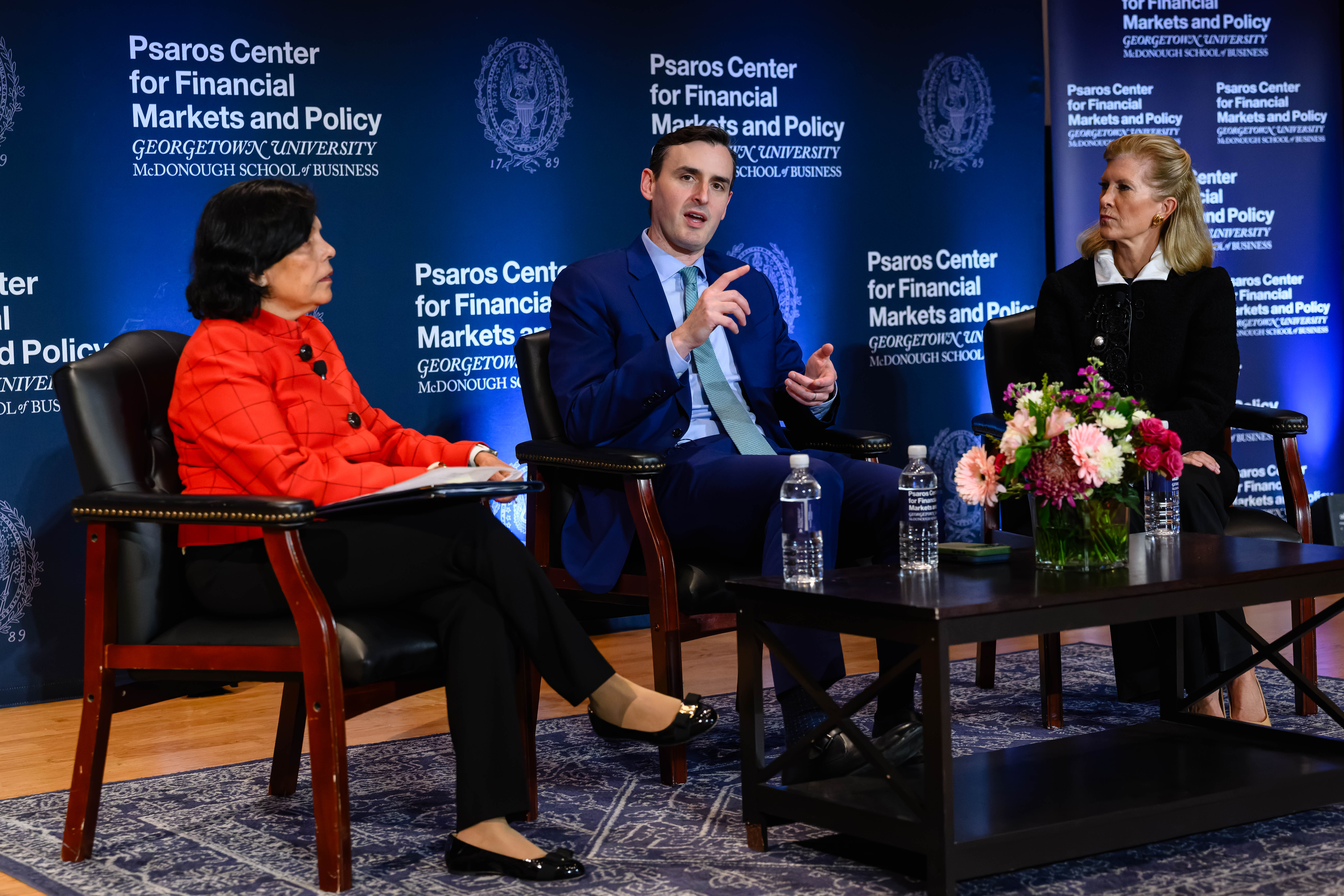
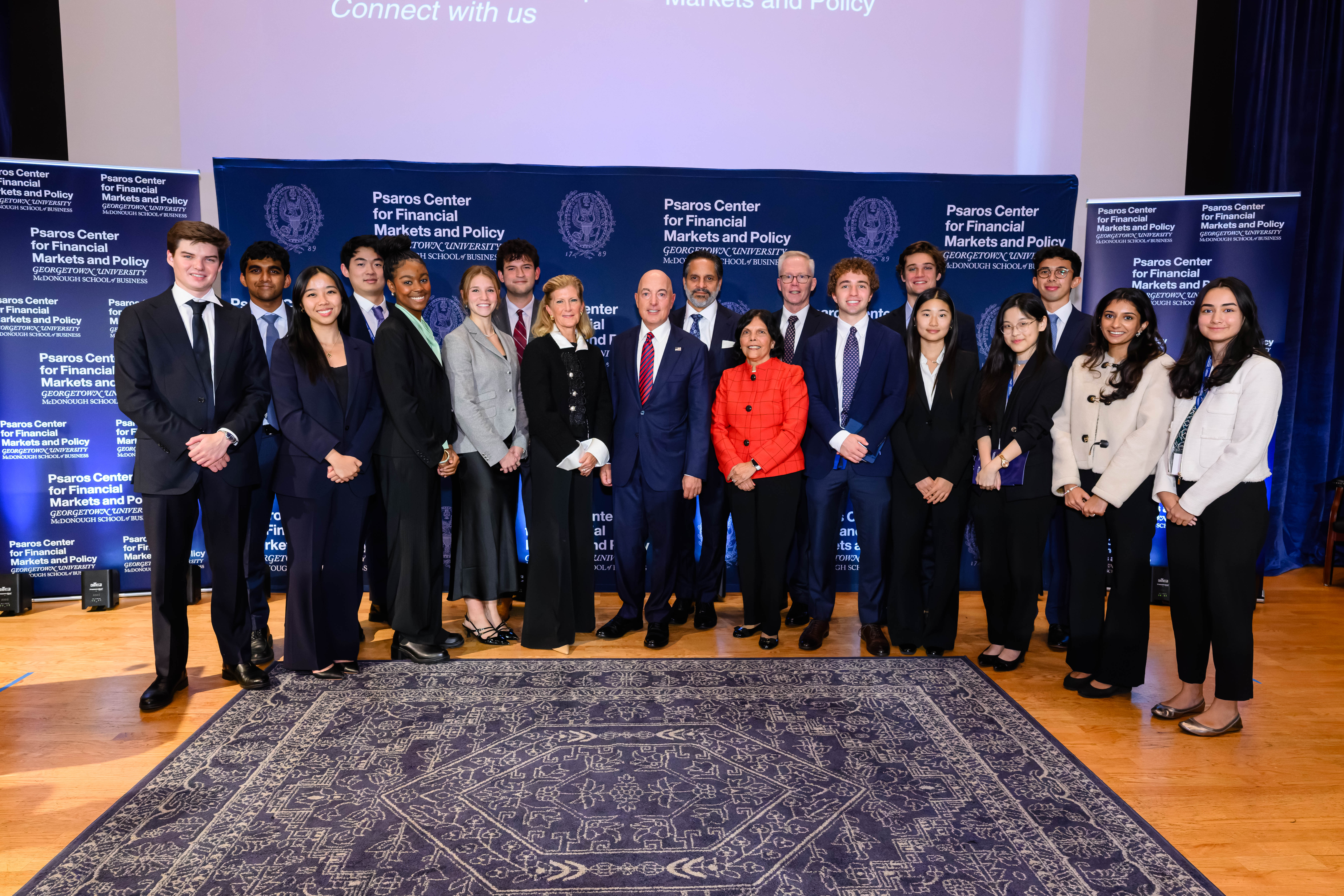
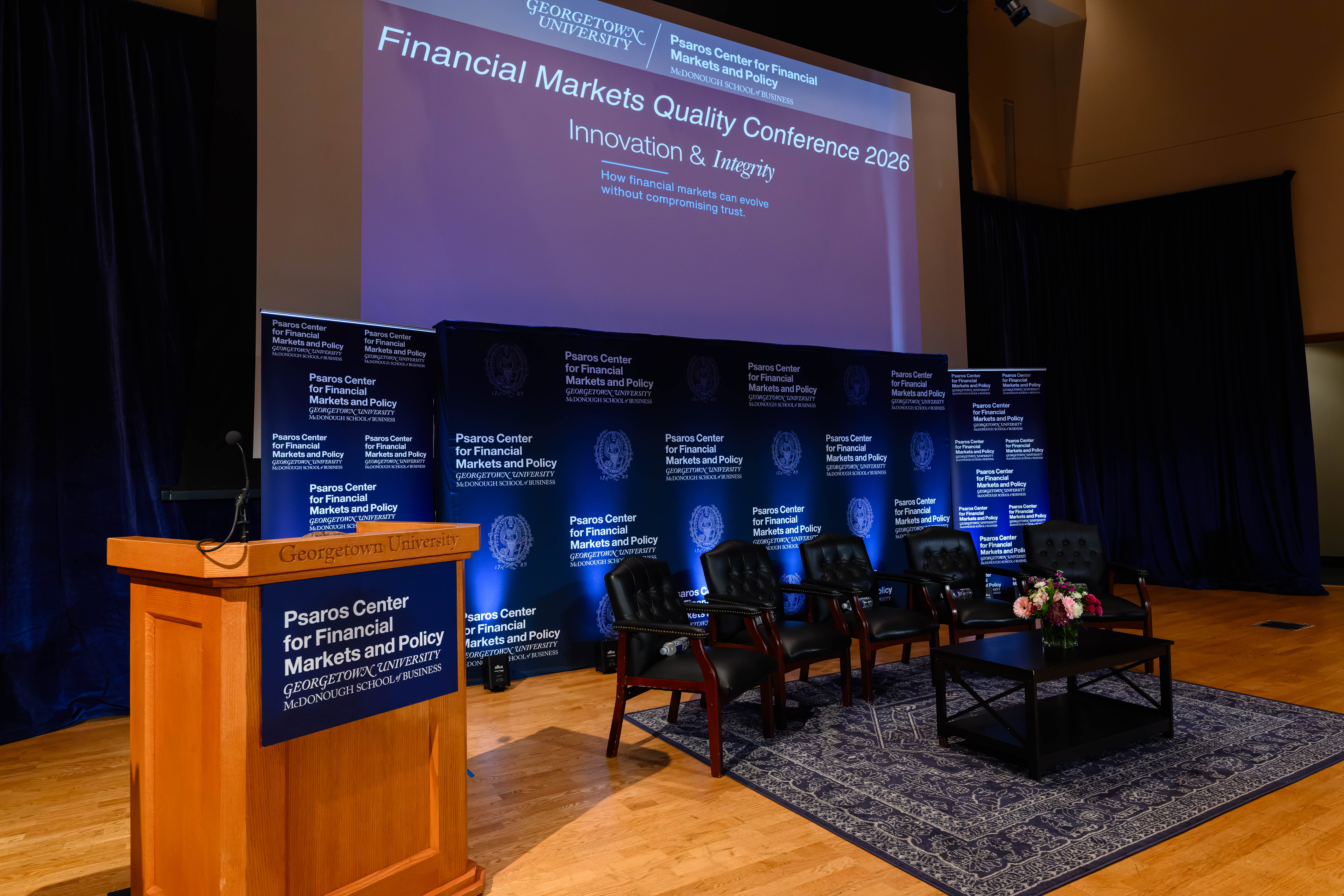
This year’s Financial Markets Quality Conference from the Georgetown Psaros Center for Financial Markets examined two aspects of the evolution that are top of mind for changemakers: innovation and integrity. Each year, the center brings together policymakers, industry professionals and scholars to discuss the latest trends, possibilities and concerns regarding the financial markets. From discussions of the Dodd-Frank Act to ESG investing to cryptocurrency and 24/7 trading, conference sessions throughout the years have offered attendees deep dives into every aspect of the changing markets. As Director of the Georgetown Psaros Center for Financial Markets and Robert E. McDonough Professor of Finance at the Georgetown University McDonough School of Business Reena Aggarwal pointed out in her opening remarks, it’s done so with the nonpartisan lens the center has become known for.

The Debate Over Prediction Markets

Many sessions this year touched on prediction markets. Trading on prediction markets such as Kalshi and Polymarket is soaring with people buying and selling event contracts related to everything from Labor Department data and initial public offering timelines to films’ Rotten Tomatoes scores and “Dancing with the Stars.” At this year’s Financial Markets Quality Conference, the opportunities and concerns posed by prediction markets were top of mind, especially given the upcoming mid-term elections.

Speakers ranged from Rostin Behnam (C’00), distinguished fellow at the Georgetown Psaros Center for Financial Markets and Policy and global head of policy and corporate affairs at Bloomberg — and former chair of the Commodity Futures Trading Commission (CFTC) — to Brian Quintenz (MBA’09), a board member of Kalshi. Key takeaways related to the current state and future of prediction markets included the following: 

  • The industry will require more guidance from lawmakers and regulators as prediction markets continue to gain popularity. Behnam said it’s time that Congress weighed in to offer a more “prescriptive sense” to the CFTC and executive branch.
  • The scope of prediction markets may be getting too wide. Amanda Fischer (MPP’08), policy director and chief operating officer at Better Markets, said the risk of failure is too high with some events contracts, such as those related to election results, while others are simply “silly” and don’t provide investors benefits. 
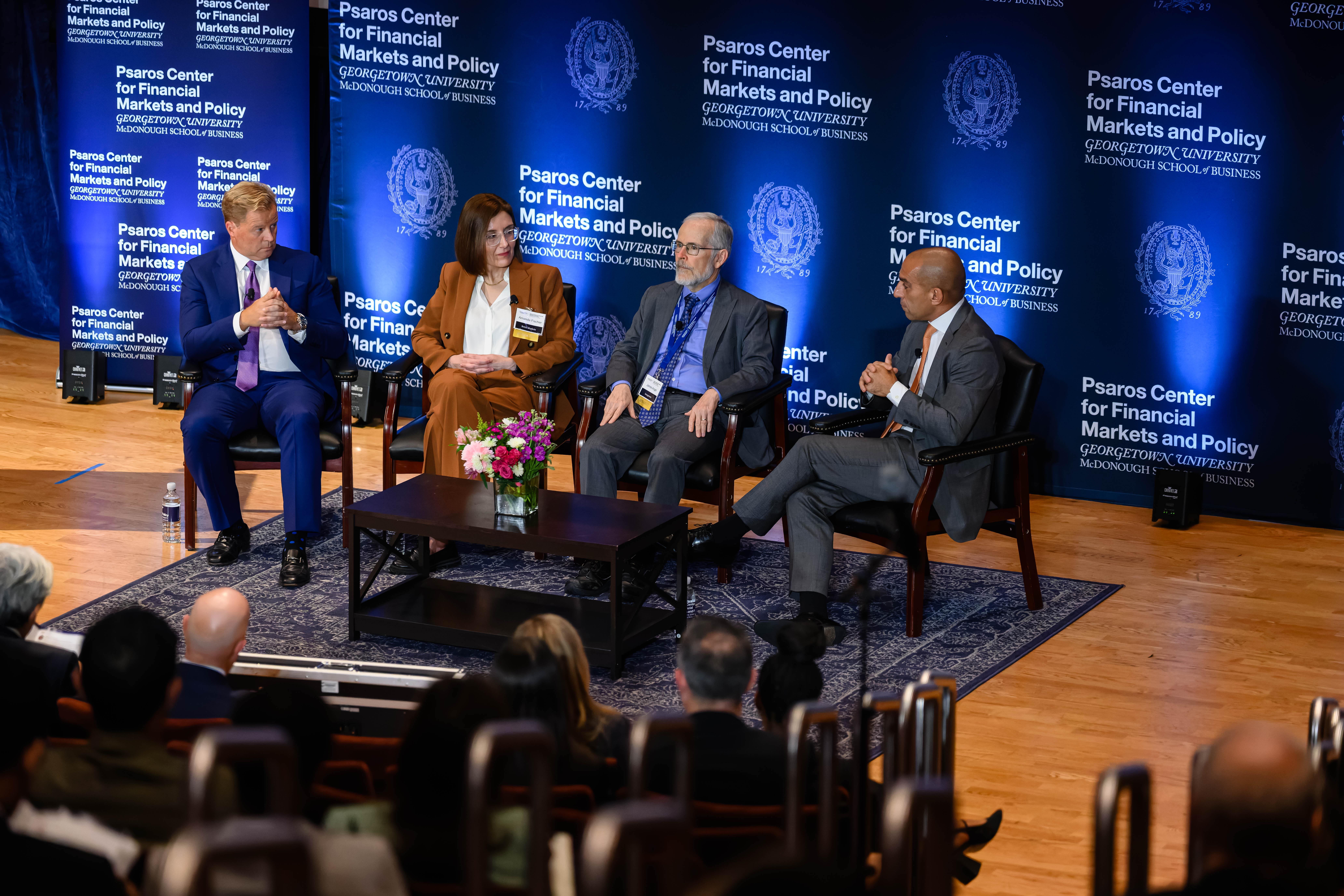
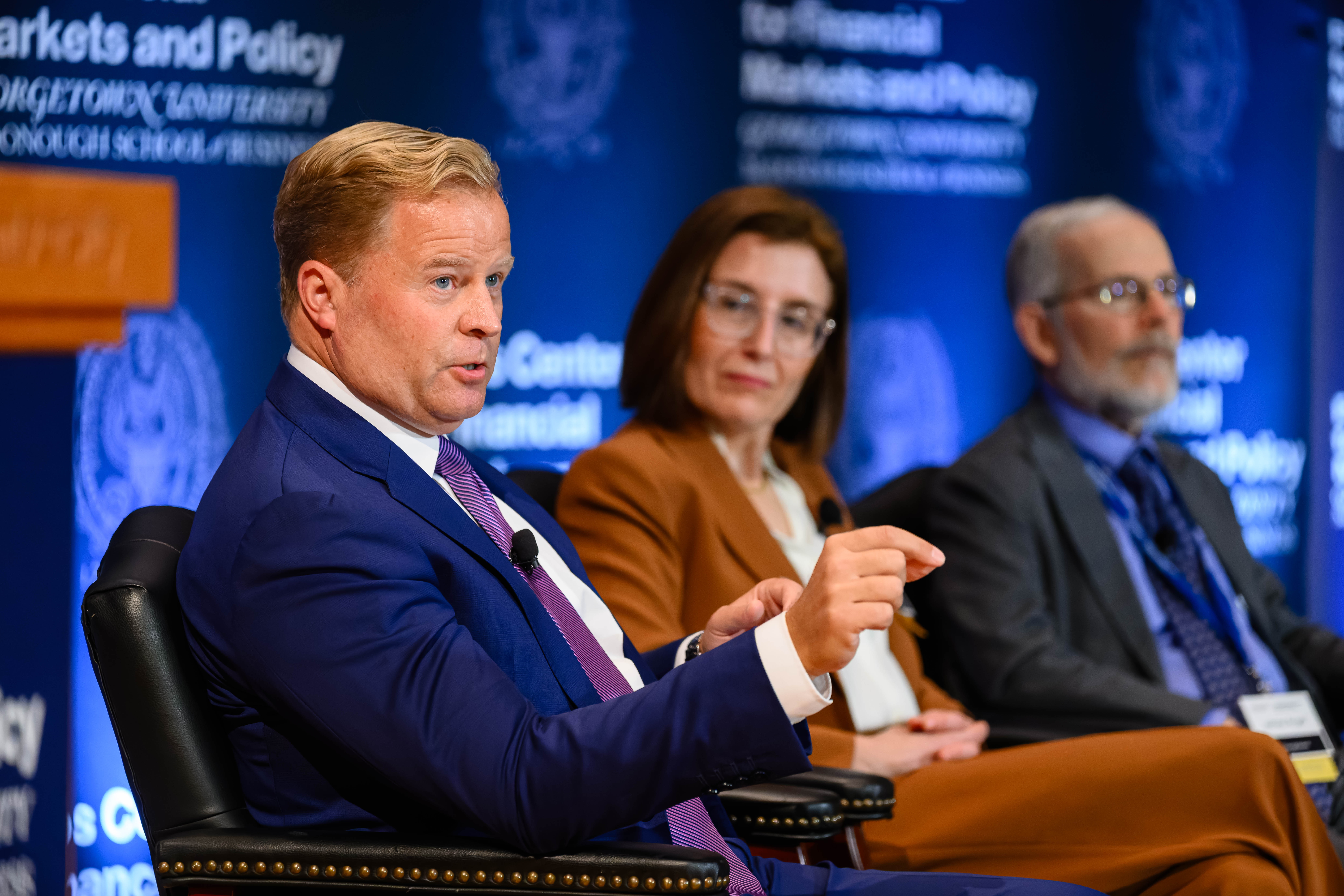
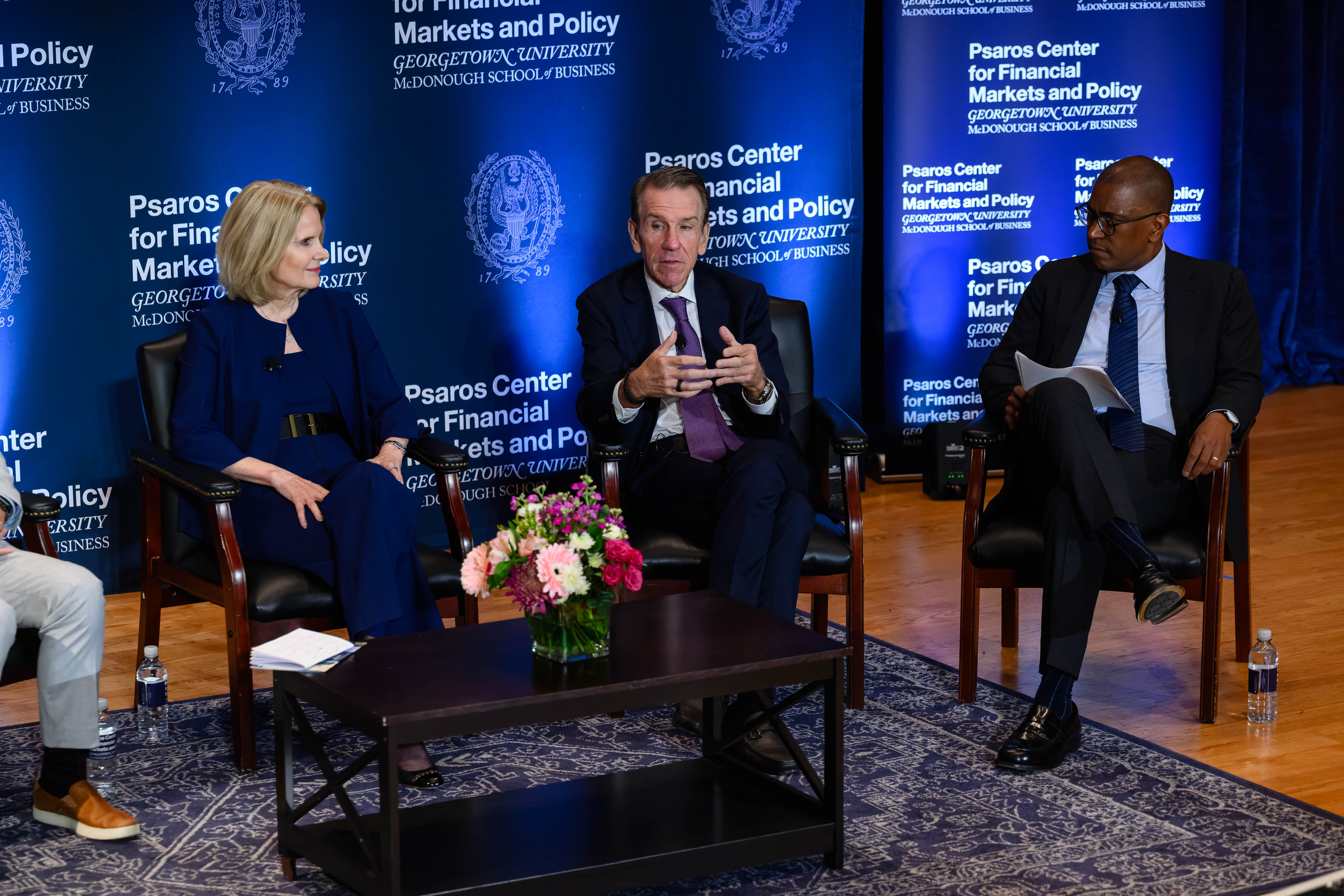
  • Market manipulation is a major concern. In a conversation with Patrick McHenry, distinguished fellow at the Georgetown Psaros Center for Financial Markets and Policy, and former chairman of the House Financial Services Committee, CME Group Chairman and CEO Terry Duffy said that while prediction markets have tapped into young peoples’ trading appetites, many may not be suitable for the long term. He added that the most important thing to keep in mind from a regulatory perspective is that you can’t list contracts that are readily susceptible to market manipulation.

Digital Assets and Tokenization Enter the Mainstream

Just a few years ago, the idea that bitcoin could be in 401(k)s or that blockchain technology would be enabling 24/7 trading may have felt absurd. Today, it’s the reality. 

Insights into the current state and future of digital assets and tokenization were inescapable at this year’s conference. From post mortems of the CLARITY Act’s failed Senate vote to the problems tokenization will help solve, experts dug into the latest innovations around digital assets:

  • Participants from a wide range of backgrounds agreed that round-the-clock trading is in our future. CME Group’s Duffy said that he believes 24/7 trading is coming for “every product on the planet,” though that the banking system will need to catch up regarding inventory first. 
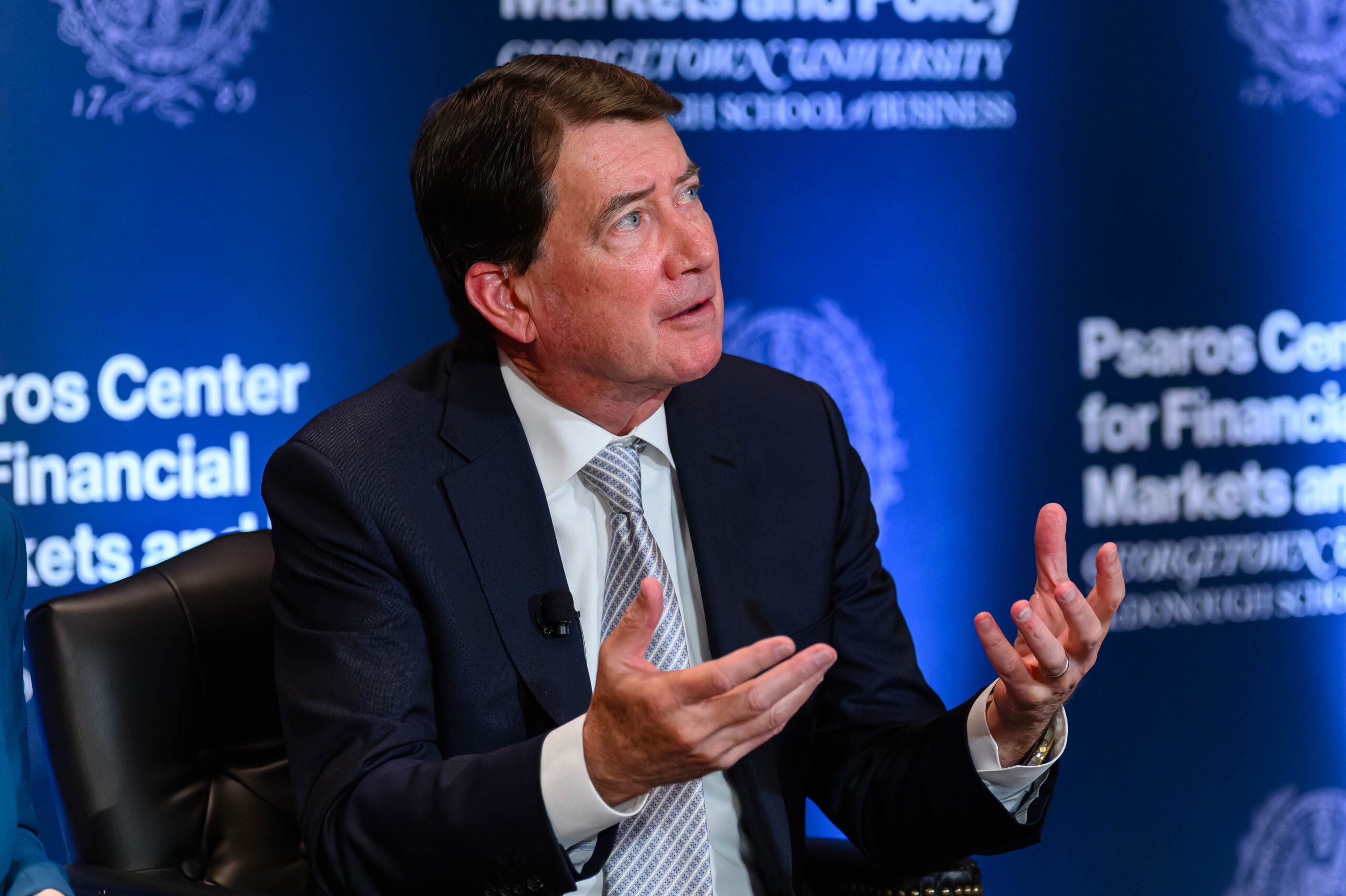
  • The CLARITY Act may not have generated enough votes to progress, but lawmakers will need to offer regulatory guidelines for digital assets at large similar to what was provided in the GENIUS Act for stablecoins. Senator Bill Hagerty (R-Tenn) who co-authored the GENIUS Act, said a framework for the digital economy is more likely to have success after the mid-term elections. Patrick Witt, executive director of the President’s Council of Advisors for Digital Assets, said a priority of the White House is to facilitate the process for the Securities and Exchange Commission (SEC) and CFTC to release rulemakings and guidance so that digital assets can continue to progress without the CLARITY Act. 
  • The Innovation Exception — a recently introduced temporary framework for the on-chain trading of tokenized stocks — will be somewhat of an experiment for the SEC during which it can consider whether the proper guardrails are in place, said Mark Uyeda (B’92), commissioner and former acting chairman of the SEC and vice-chair of the IOSCO Board. 
  • The evolution is happening quickly and tokenization is on the way to becoming the new norm. Samara Cohen, global head of market development at BlackRock, said that if tokenization fulfills its promise, in a decade we won’t be talking about tokenization. It will just be how the markets work.

Private Markets Come the Need for Investor Education and Guardrails  

Retail investors have long sought access to the private markets. But now that they’re getting that access, it’s crucial that regulators set the appropriate boundaries. Experts on the private markets and regulation offer key insights into what’s needed: 

  • Valuation — and the way that it’s more art that science in the private markets — is top of mind. Patricia Luscombe, managing director & global co-head of valuations & opinions at Lincoln International, said there isn’t a best practice yet around valuations, but that more firms are opting for weekly and even daily valuations as opposed to quarterly ones.  
  • Regulators will have their work cut out for them in the coming years as private markets have more avenues into retail investors’ portfolios.  Andrew Kroculick (MBA’17), chief operating officer of Nasdaq Private Market, said that the agencies that create the rules around this type of investing need to gain a better understanding of how the markets work. Hope Jarkowski, chief legal officer of Broadridge, chimed in that a heavy hand with regard to regulation isn’t needed, and that regulators should set the framework, let the market grow into the framework and have a retrospective review.

The biggest takeaway was that education is key. Panelists including David Chubak, principal and head of wealth management & field management at Edward Jones, and Ken Kencel (B’81), CEO of Nuveen affiliate Churchill Asset Management, highlighted the need for players across private markets to ensure investors understand what they’re buying.

The High-Rate Environment 

Yields are rising, with the 10-year Treasury currently sitting around 5%, and the Federal Reserve recently hiked interest rates for the first time in three years.

While much of the conference focused on evolving technology, experts also discussed the basics of monetary policy and lawmakers’ roles: 

  • Senator Hagerty said that Congress shouldn’t wade into the specifics of the Federal Reserve’s monetary policy, and that its focus should be on bringing down costs for borrowers across the economy and managing the country’s deficit. 
  • As far as companies are concerned, JPMorgan Chase’s Callahan Erdoes said we’re seeing a shift from the “summer of capital” — in which capital going all the way back to Covid-19 stimulus, moved all around the world — to a fall of price discovery. 

All eyes will be on the Federal Reserve during its upcoming Federal Open Market Committee meetings. 

AI Creates Opportunities for Future Leaders 

Artificial intelligence is now behind-the-scenes of nearly every aspect of our lives, from where we choose to eat and the entertainment we consume to how we manage our money. At this year’s conference, AI and its impact on the financial markets made its way into nearly every session.

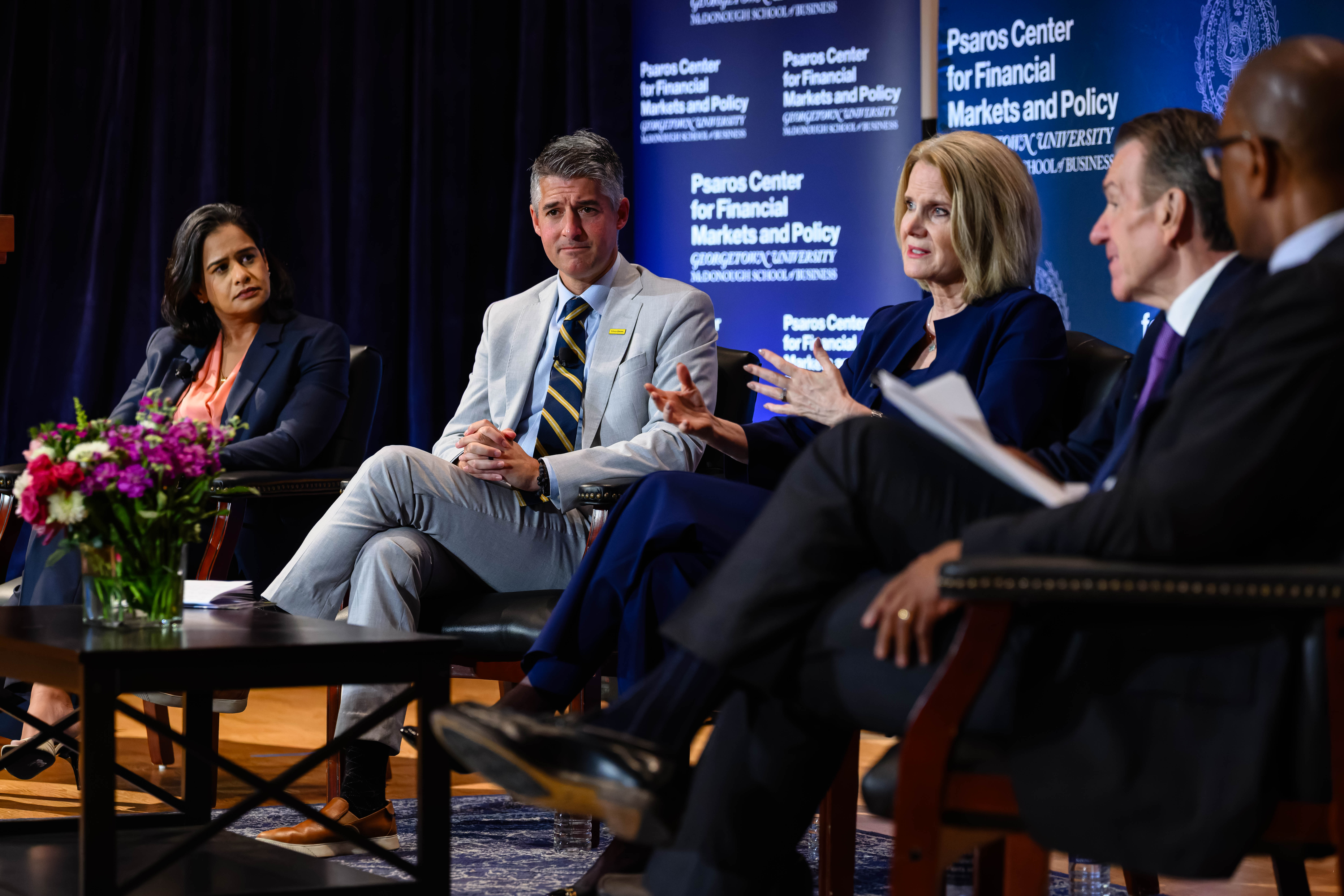
That included conversations on whether there is an AI bubble, but also on the potential that the technology promises career-wise. While many young workers and students feel that AI is a threat to their opportunities in the job market, the industry leaders at this year’s conference said that the technology provides the ability for people to grow their careers: 

  • Wall Street is using AI to better reach consumers and investors and improve systems. Mary Callahan Erdoes (C’98), CEO of Asset and Wealth Management at JPMorgan Chase, said that AI touches every aspect of her firm’s work and that young people who have the skills to take advantage of AI have proved to be extremely valuable to the organization. 
  • In fact, the threat may not be from AI itself. Instead, Dan Katz, first deputy managing director of the International Monetary Fund, said that concern should be the threat that the job market will pose to people who don’t know how to use these tools.

AI isn’t going anywhere. The sessions highlighted the need for guardrails, but emphasized that around AI instead of slowing down its innovation.

The Road Ahead

From prediction markets and tokenized stocks to private-market access, a high-rate environment, and the rise of AI, this year’s Financial Markets Quality Conference made one thing clear: the markets are evolving faster than the rules that govern them. Across every session, speakers returned to the same question. How do we encourage innovation while protecting the integrity that makes markets work? The answers varied, from calls for clearer guidance from Congress to a lighter regulatory touch, but the shared conviction was that guardrails and progress can go hand in hand.

These conversations are far from over. Many of the questions raised this year, from the fate of digital asset legislation to the future of event contracts, will look different after the mid-term elections. The Psaros Center will keep bringing together policymakers, industry leaders, and scholars to examine them with the same nonpartisan lens.

Stay connected. Follow the Georgetown Psaros Center for Financial Markets and Policy on LinkedIn (Psaros Center for Financial Markets and Policy), Instagram (@gupsaroscenter), and X (@GUFinPolicy) for research, events, and analysis on the issues shaping tomorrow’s markets. And keep an eye out for details on our next event.

We hope to see you there.
More from the News Hub